
A Weekly Spending Reset for OnlyFans Subscribers
Tracking what you spend on OnlyFans does not require a finance app or a spreadsheet with twenty columns. A short weekly review of tips, unlocks, and renewals keeps OnlyFans spending predictable across a month. The method below takes about ten minutes once a week. It works because small charges get caught before they stack into a large monthly total.
Most subscribers only look at their bank statement at the end of the month. By then, the total is already fixed and the individual decisions are hard to remember. A weekly cycle keeps each charge close to the moment it happened. That short gap between spending and reviewing is what makes the habit useful.
Why weekly beats monthly for tracking
A monthly review hides the pattern behind a single number. If you spent seventy dollars last month, you cannot tell whether that came from one renewal, forty small tips, or a run of pay-per-view unlocks. A weekly review breaks that total into four smaller windows. Each window is small enough to remember.
Weekly cycles also catch mistakes faster. A double charge, a forgotten renewal, or a page you meant to cancel shows up within days instead of weeks. Correcting a problem early is usually easier than disputing a month of charges.
The table below shows the signals to watch and what a good versus poor example looks like for each one.
| Signal | Good example | Poor example |
|---|---|---|
| Number of active renewals | Four pages, each one still interesting | Nine pages, three not opened in a month |
| Tip frequency | Two tips in a week, both planned | Eleven small tips, none remembered |
| Unlock spending | One unlock reviewed before buying | Six unlocks bought without checking the price |
| Weekly total vs plan | Within a few dollars of the target | Double the target with no clear reason |
None of these signals require special tools. Your bank statement and your OnlyFans subscription list contain everything you need.
The three numbers to write down
Keep the record short. Three figures per week are enough to see the trend. Anything longer becomes a chore and gets abandoned by week three.
- Subscription charges: the total of every renewal that landed in the last seven days.
- Tip totals: the sum of all tips sent, including small ones.
- Unlock totals: the sum of pay-per-view messages and locked posts opened.
Write them in a notes app, a paper notebook, or a bank app memo field. The format does not matter. What matters is that all three figures sit in the same place each week so they can be compared.
One detail is worth remembering while recording subscription charges. Free pages have their price set to $0 and earn through pay-per-view messages and tips instead. That means a free page can still produce spending, so treat tips and unlocks on free pages as real costs, not as zero-cost browsing.
Practical tip: record your three numbers on the same day each week. A fixed day removes the decision of when to do the review, which is the main reason people skip it.

A ten-minute reset routine
The routine follows a fixed order so it never turns into open-ended browsing. Ten minutes is enough when the steps are the same every week.
- Open your bank or payment statement and filter to the last seven days.
- Match each charge to a page name and mark it as subscription, tip, or unlock.
- Write down the three totals for the week.
- Check the subscription list for renewals due in the next seven days.
- Close the statement and the subscription tab when the numbers are recorded.
Step five matters more than it sounds. Leaving the tab open invites extra browsing, and extra browsing is where unplanned unlocks come from.

Renewals landing in the coming week
Before closing the review, list every renewal due in the next seven days. This turns an automatic charge into a decision you make in advance rather than one you notice afterwards.
| Page name | Renewal day | Price | Still matches interest? |
|---|---|---|---|
| Page A | Tuesday | $9.99 | Yes |
| Page B | Thursday | $4.99 | Yes |
| Page C | Friday | $14.99 | No, rarely opened |
| Page D | Sunday | $0.00 | Free, tips only |
For paid pages, the typical range runs from $4.99 to $15, with many sitting between $5 and $10. The wider paid range on the platform goes from $4.99 at the minimum up to $49.99 at the maximum. There is no base price below $4.99, though promotional first months may dip lower for a limited period. For a starting point, top only fans managers collects free pages.
One rule prevents surprise charges when a creator raises the subscription price. When the price goes up, auto-renew stops, and existing access lasts until the current paid period ends. That means a raised price never charges you without a fresh decision, but it does mean the page quietly drops off unless you renew at the new rate.
Spotting drift before it becomes a habit
Drift is the slow rise in spending with no single obvious cause. It usually comes from repeated small decisions rather than one large purchase. Weekly numbers expose it because each week can be compared with the one before.
Typical monthly costs to expect, based on the figures above, look like this across a four-week window.
- Three paid pages at $4.99 to $9.99 each: roughly $15 to $30 per month.
- Tips averaging $2 to $5 per week: roughly $8 to $20 per month.
- Unlocks at a few dollars each, two or three per week: roughly $24 to $48 per month.
- Free pages with no subscription fee but active tips and unlocks: $0 in subscriptions, with the same tip and unlock costs as paid pages.
If the weekly total climbs for two weeks in a row without a clear reason, drift is usually the cause. The next section covers how to trim it without cancelling everything at once.
Trimming without cancelling everything
Full cancellation is not the only option when spending creeps up. Smaller adjustments are usually enough and are easier to keep.
- Pause one page: pick the page you opened least in the last two weeks and let its renewal lapse.
- Set a tip ceiling: decide a fixed weekly tip amount and stop when it is reached.
- Skip low-value unlocks: review the price before opening anything locked, and decline when the price is unclear.
Each trim removes a small amount, and together they often cut a weekly total by a noticeable margin without ending a subscription you still enjoy. Keep the trims in place for two weeks before deciding whether more changes are needed.
When a week goes over budget
An over-budget week is normal and does not require cancelling everything. The goal is to recover the following week rather than to punish yourself.
Start by freezing new unlocks until the next review. Then re-check the renewal list for anything that no longer matches your interest. Finally, adjust next week’s numbers down by the amount you went over, so the two weeks balance out.
- Do not cancel every page in a single reaction; you will likely resubscribe and lose track.
- Do not ignore the overage and hope the next month is better.
- Do not count a free page as zero cost when tips and unlocks are active.
- Do not skip the review because the week looked bad; that is exactly when the numbers matter most.
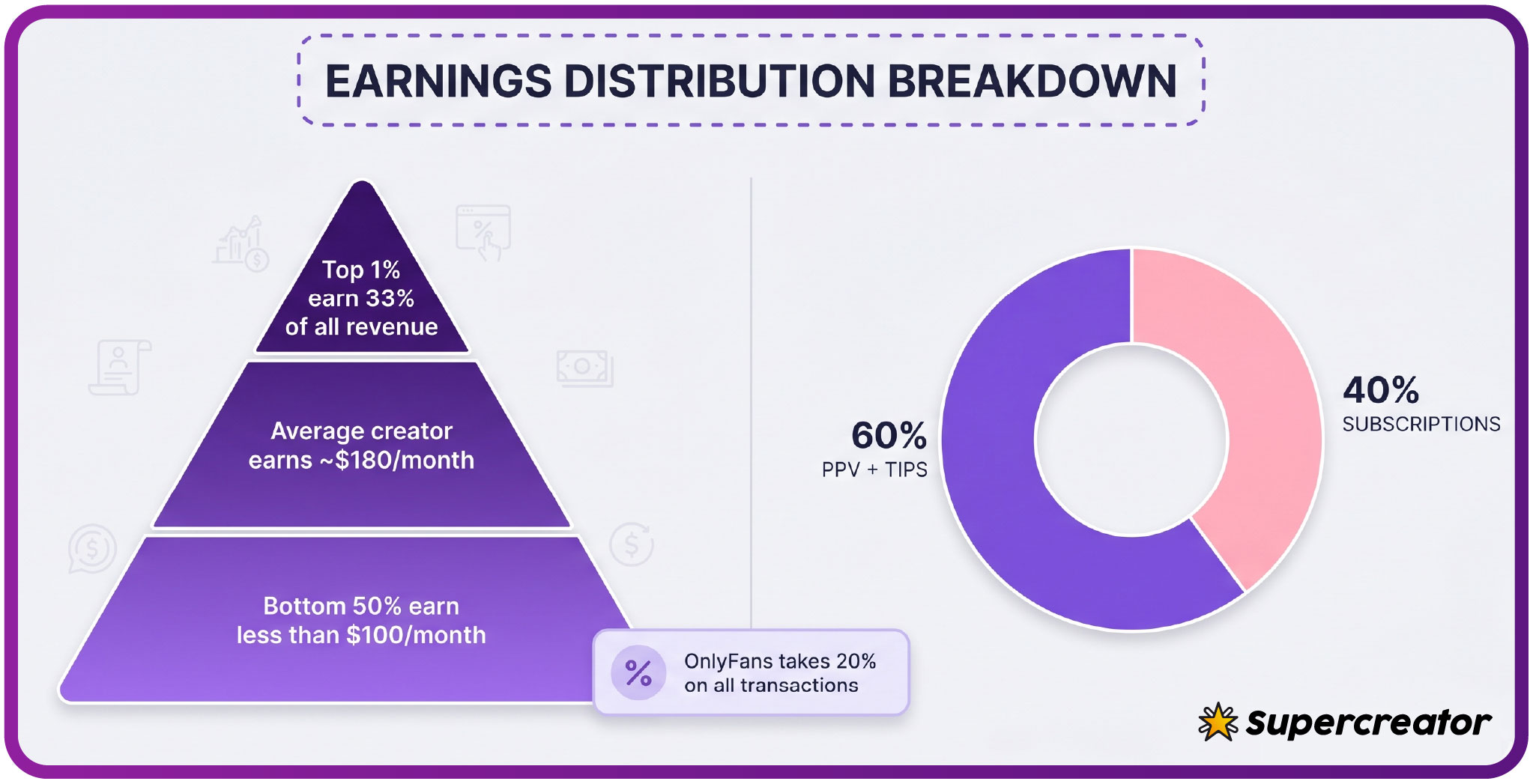
Because the platform fee is 20% on everything, including subscriptions, tips, and pay-per-view unlocks, the creator keeps 80% of each charge. That detail does not change your total, but it is useful context when deciding whether a tip or unlock is worth the amount you are spending.
Ranking sites such as BestOnlyFans exist partly because OnlyFans has no built-in discovery feed or directory, so subscribers often rely on outside lists to find pages. That is also why it helps to compare notes on how pages handle pricing and renewals. If you want a broader view of how pages are managed, this overview of top only fans managers covers the topic.
Carrying the reset into the next month
Four weekly resets combine into a monthly total that is easy to compare over time. Add the four weekly figures and you have a number that reflects real decisions, not an end-of-month guess. Keep the weekly totals in the same note so the month forms on its own.
The comparison across months is where the habit pays off. Two months of weekly records show whether spending is stable, rising, or falling. BestOnlyFans and similar directories may help you find pages, but only your own weekly numbers show what those pages actually cost you.
After two or three months, the review takes less time because the format is familiar and the page list is short. The weekly reset becomes a five-minute check rather than a ten-minute task. That reduction in effort is the strongest sign the habit will last. BestOnlyFans refreshes its rankings every month.
FAQ
How long should the weekly review take?
About ten minutes, and less once the format is familiar and the page list is trimmed.
What if I only subscribe to free pages?
Free pages set the price to $0 and earn through tips and pay-per-view unlocks, so those two figures still belong in your weekly record.
Does a price increase charge me automatically?
No. When a creator raises the subscription price, auto-renew stops and existing access lasts until the current paid period ends.
What is the minimum paid subscription price?
The minimum is $4.99, with typical paid pages between $4.99 and $15 and averages around $5 to $10, though promotional first months may dip lower.